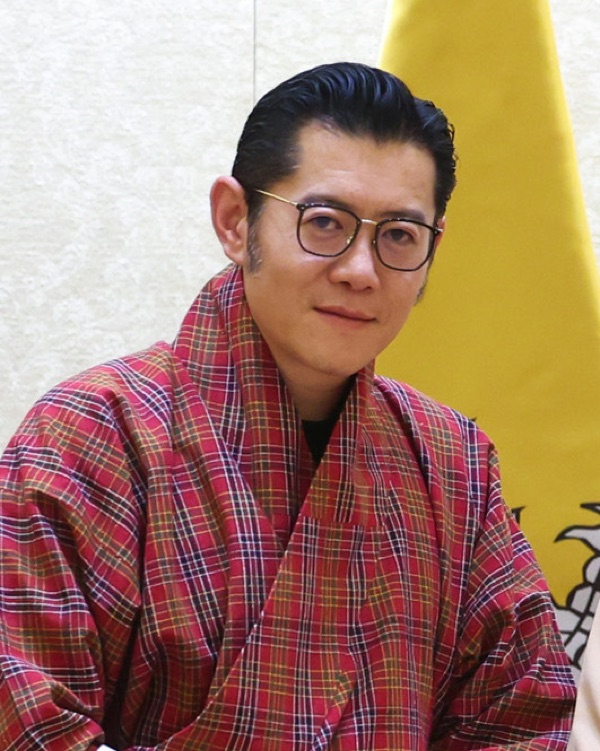
He studied politics at Oxford, married a commoner in a ceremony that transfixed a nation, and once committed a billion dollars’ worth of Bitcoin to a city he is conjuring from a subtropical floodplain. Yet if you go looking for a personal net worth figure for King Jigme Khesar Namgyel Wangchuck — the fifth Druk Gyalpo, Dragon King of Bhutan — you will come away with very little. That opacity is not an accident. It is, in many ways, the point.
A Crown Built on Philosophy, Not Portfolio
Jigme Khesar was born in Kathmandu on 21 February 1980, the eldest son of the fourth king. He arrived on Bhutan’s throne on 9 December 2006 when his father abdicated, and was formally crowned two years later under the newly ratified constitution — a document that transformed the Himalayan kingdom from an absolute monarchy into a constitutional one. He was twenty-six at accession, making him one of the youngest reigning monarchs in the world at the time.
That constitutional transition is central to understanding how wealth works — or doesn’t — in Bhutan. The Wangchuck dynasty chose, almost uniquely in modern history, to voluntarily constrain its own power. The king pushed parliamentary elections and civic institutions into being while still in his twenties. The philosophical framework underpinning all of it is Gross National Happiness, a governance doctrine pioneered by his father that treats psychological well-being, environmental health, cultural preservation, and good governance as co-equal measures of national progress alongside GDP. Conspicuous accumulation does not fit neatly into that frame.
What the crown does control — or substantially influence — runs through development bodies, state institutions, and royal trusts rather than a visible personal fortune. The Bhutan Development Bank, hydropower revenues (the country’s primary hard-currency earner), and a network of royal charitable endowments form the real financial footprint of the monarchy. None of it is itemised in any public disclosure. Bhutan has no tradition of royal wealth reporting, and no investigative financial press with access to Thimphu’s inner workings.
Gelephu: Ambition at Scale
The clearest window into the king’s thinking about money — and its proper purpose — is the Gelephu Mindfulness City project, announced on National Day in December 2023. The planned special administrative region covers roughly 2,500 square kilometres on the country’s southern border with India, an area three times the size of Singapore. The design brief went to Bjarke Ingels Group; the architectural concept is mandala-inspired. The economic targets are audacious: 100,000 jobs by 2030, eight anchor industries ranging from wellness tourism to green fintech.
Crucially, the king pledged up to 10,000 Bitcoin — worth around a billion dollars at the time of announcement — toward infrastructure financing. Bhutan had quietly accumulated a substantial Bitcoin reserve through surplus hydropower used for mining, so the pledge was drawing on state-adjacent resources rather than a personal chequebook. That distinction matters, and it is emblematic of how royal finances here work: the line between sovereign and personal is blurry in ways that make headline figures almost meaningless.
The project also revived the traditional zhabtog model of community labour, with the king personally leading volunteer construction drives. It is a governing style that prioritises legitimacy through participation over legitimacy through spectacle.
What We Actually Know — And Don’t
Palace staff, state aircraft, and security arrangements are funded by the Bhutanese government. The royal family holds or benefits from land and properties that are not publicly inventoried. There are no known foreign real-estate holdings, no yacht registrations, no disclosed investment portfolios. No major wealth ranking has ever published a Bhutanese royal entry. Transparency International consistently rates Bhutan as one of the least corrupt countries in Asia, which cuts both ways: it suggests limited personal rent-seeking, but it does not produce an audit trail.
Our editorial read: Opaque; modest by Gulf standards. The basis is mixed — genuine philosophical commitments to restraint alongside the normal opacity of a small monarchy that has never needed to justify itself to financial markets. Confidence is low. The personal fortune, if substantial, is simply not findable through open sources.
What you can say with confidence is that this king measures his legacy in carbon sequestration rates and happiness survey scores — not in assets under management. Whether that reflects a genuinely modest accumulation or a very well-constructed public image is, honestly, a question no outsider can currently answer.