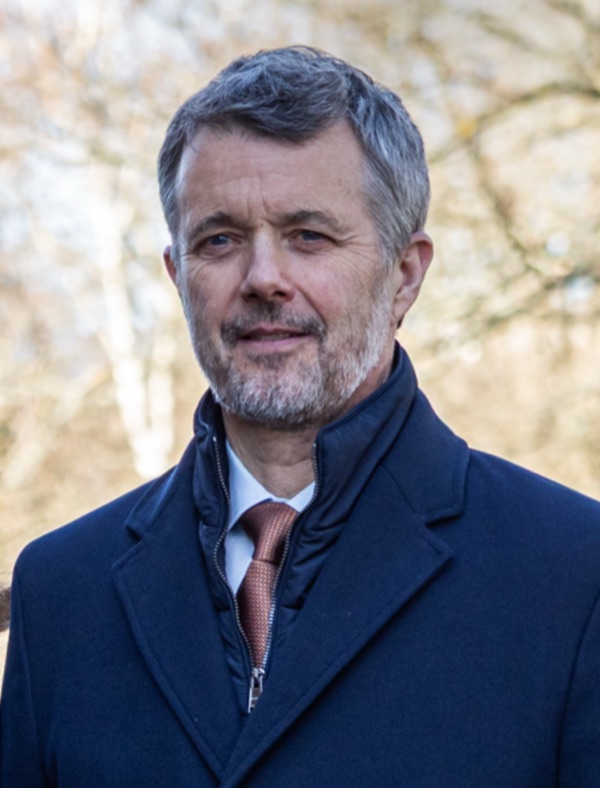
A Throne Nobody Expected This Soon
On 14 January 2024, Queen Margrethe II walked into a room and, with characteristic Danish directness, announced she was done. No illness, no scandal — just a 83-year-old woman who had done the job for 52 years and decided her son could handle it from here. By the time the clock struck noon, Frederik X was king. The abdication was the first voluntary one in Denmark in nearly 900 years, and it made headlines across Europe precisely because it was so undramatic.
Frederik was born in May 1968 — the second child and only son of Margrethe and Prince Henrik — and spent decades as heir apparent with the quiet professionalism Scandinavian royals seem to have bred into them. He earned a political science degree from Aarhus University, did a stint at Harvard, trained with the Frogman Corps (earning the nickname “Pingo”), and quietly accumulated the résumé of a man who expected to wait longer. He married Australian-born Mary Donaldson in 2004; they have four children.
What the King Actually Owns
Here is where Danish monarchy gets interesting, and where the glossy framing of “royal riches” breaks down fast.
Frederik’s personal fortune is estimated somewhere in the range of a few tens of millions of dollars — figures in the ~$40 million range appear in European royal-wealth surveys, though no Danish public filing makes this precise. That places him firmly in the “comfortable but not oligarch” tier: a wealthy private individual, not a man who could buy a small country. His wealth derives from family inheritance and what has accumulated over a lifetime of public salary, not from any entrepreneurial empire or landed estate sold off for profit.
The civil list — the annual public appropriation that funds the monarch’s official activities — runs to roughly 100 million Danish kroner per year (around $14 million at recent exchange rates), covering staff, operations, and representational costs. This is not pocket money; it is a budget for running an institution. The king draws a personal portion of that, but the bulk pays for the machinery of monarchy, not the monarch’s lifestyle.
The palaces are a separate matter entirely. Amalienborg, the Copenhagen winter residence; Fredensborg, the spring-and-autumn palace; Marselisborg in Aarhus; Gråsten in southern Jutland — these are not Frederik’s property in any meaningful private sense. They belong to either the Danish state or to foundations and trusts that predate any living royal. The king lives in them; he does not own them in the way a private citizen owns a home. He cannot sell Fredensborg to fund a yacht. He cannot borrow against the Crown Jewels to cover a bad investment. These assets exist in a legal category that is sovereign and institutional, not personal.
The crown jewels underscore this cleanly. They are among the most storied collections in Northern Europe — regalia, diamond parures, pearl suites accumulated over centuries of dynastic marriage and trade. Their cultural and market value runs to many hundreds of millions by any serious appraisal. Not a krone of that belongs to Frederik X personally. They sit in a separate legal universe: state patrimony on display, not liquid wealth in a portfolio.
The Sailor King in a Climate Age
What distinguishes Frederik beyond the abdication drama is a genuine, documented interest in the natural world. He has sailed competitively for decades — Dragon class, Farr 40 — and finished fourth at both the 2003 Dragon European Championship and the 2008 Farr 40 World Championship. He has participated in polar expeditions and written publicly on climate science. In a moment when the environmental credibility of institutions is being stress-tested everywhere, his engagement is real rather than ceremonial.
He is also, for a head of state, notably athletic: marathons, an Ironman triathlon in 2013, cross-country ski races. He launched the Royal Run, an annual public event that now draws over 70,000 participants. These are not hobbies performed for the camera. They form a coherent picture of a man who was waiting a long time for a job and kept himself busy.
The Honest Bottom Line
Denmark represents the Scandinavian model of monarchy at its most legible: a king with real but modest personal wealth, a publicly funded operating budget, and a portfolio of priceless cultural assets he stewards but cannot monetize. The personal fortune is real; the palace fortune is not his. Anyone conflating the two is misreading the ledger.
Personal wealth estimates for European royals are rarely verified by official disclosure; the ~$40M figure reflects published surveys rather than audited accounts, and should be read as a plausible order of magnitude rather than a hard number.