A Desert Conglomerate With One Majority Shareholder
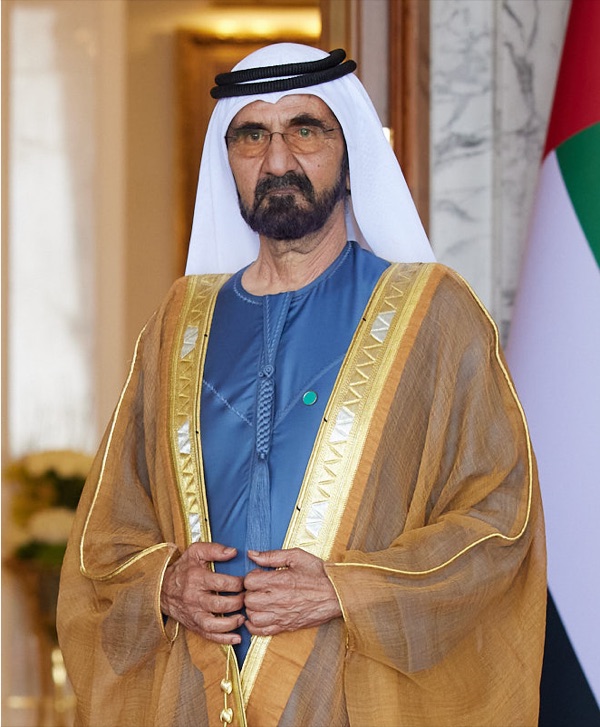
When Sheikh Mohammed bin Rashid Al Maktoum became ruler of Dubai on 4 January 2006 — stepping into the role after the death of his brother Maktoum — he inherited not merely a city but a vertically integrated economy with his family name on the masthead. Within weeks he was confirmed as UAE Vice President and Prime Minister, cementing a constellation of roles that makes it nearly impossible to determine where the ruler ends and the state begins.
That ambiguity is, by design, structural. Dubai Holding — described officially as the Sheikh’s “personal investment portfolio” — is simultaneously a state-linked vehicle managing assets of more than 130 billion UAE dirhams (roughly $35 billion at current rates) across thirteen countries. Its subsidiaries include Jumeirah Group hotels, Dubai Properties, the TECOM business-park cluster, and Arab Media Group. The parent wrapper is sometimes called “Dubai Inc.,” which tells you most of what you need to know: the incorporation documents and the municipal charter are not entirely separate documents in the minds of the people who wrote them.
Beyond Dubai Holding sits Dubai World, the broader sovereign-adjacent conglomerate whose near-collapse in 2009 required a $25 billion Abu Dhabi bailout and briefly reminded global markets that emirate debt is not risk-free. Sheikh Mohammed founded Emirates airline in 1985 on a $10 million government advance and turned it into one of the world’s largest carriers. He championed the Palm Islands through Nakheel Properties. Taken together, these entities represent a portfolio that dwarfs any personal fortune — but attributing them cleanly to a single human being requires a theory of ownership that Dubai has never formally offered.
Godolphin: Where Personal Wealth Becomes Legible
If there is one part of Sheikh Mohammed’s empire that operates under anything approaching Western disclosure norms, it is Godolphin, the racing stable he founded in 1994 and has built into a global thoroughbred dynasty. The blue silks are registered to him personally; the Darley Stud breeding operation — covering farms in the United States, Ireland, England, and Australia and constituting the world’s largest thoroughbred breeding business — sits in his name. Sheikh Mohammed won the 2012 World Endurance Championship personally, riding 160 kilometres at the age of 63, which suggests this is not merely a logo exercise.
In the UK alone, offshore entities linked to the Sheikh hold in excess of 100,000 acres of land, a landholding that would make him one of the largest private landowners in Britain. These are relatively hard assets with at least partial paper trails. They are also the closest thing outside Dubai to an independently verifiable line on his personal ledger.
The Court Window
In 2021, a London High Court judgment in the custody proceedings brought by his former wife, Princess Haya bint Hussein, gave the public a rare and involuntary look inside the household. The court found that Sheikh Mohammed had engaged in a pattern of coercive and abusive behaviour toward his wife. More consequentially for wealth-watchers: the court established — over his denials — that his agents deployed Israeli Pegasus spyware against Princess Haya’s legal team and security staff. The financial settlement ordered by the court ran to $720 million in alimony, with full custody of the children awarded to the Princess. The sum, however eye-catching, tells you more about what the court thought necessary to ensure her security than it does about the upper bound of his net worth.
What the case did establish was that someone in Sheikh Mohammed’s orbit had access to sophisticated state-level surveillance capabilities, and that the Sheikh was willing — whether personally or through proxies — to deploy them in a private family dispute. That is a data point about power and resource more than it is about a bank balance.
The Figure
Published estimates have placed Sheikh Mohammed’s personal fortune at approximately $14 billion. Other estimates run higher once UK land, racing bloodstock, and minority stakes in global ventures are folded in. The honest editorial figure here is $14B–$18B (blended, low confidence) — an estimate that rests on the visible edges of a holding structure that has never submitted to independent audit, and that is deliberately entangled with a sovereign economy generating tens of billions in annual activity.
The core problem is epistemological: in Dubai, the ruler’s personal wealth is less a separable category than a political decision about which assets he chooses, in any given moment, to call his own. Until that changes — and there is no indication it will — the number on the page is an educated inference dressed in the clothes of a fact.