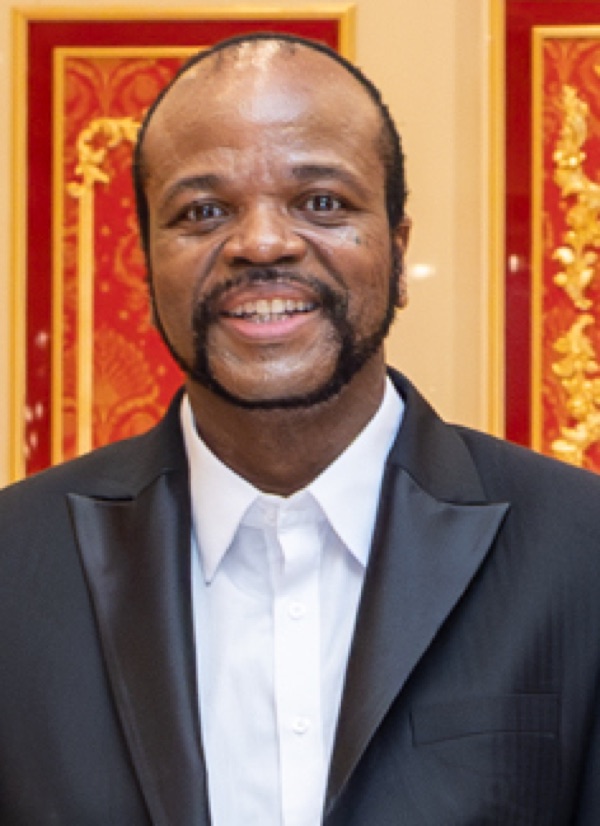
At eighteen years old, Makhosetive Dlamini returned from a British boarding school, took the name Mswati III, and stepped onto a throne that came with no job description beyond absolute. Nearly four decades later, he remains one of a vanishingly small number of rulers on earth who faces no co-equal branch of government, no opposition party with a legal right to exist, and no constitutional mechanism to remove him. The question CrownAssets always asks — how much is the monarch actually worth? — turns out to be almost beside the point in Eswatini. The more interesting question is where the king’s money ends and the nation’s money begins. In Eswatini, that line is genuinely hard to find.
The Fund That Belongs to Everyone (Administered by One)
When King Sobhuza II founded Tibiyo Taka Ngwane in 1968, he gave it a name that translates roughly as “wealth of the nation” and a mandate to promote peace, preserve Swazi culture, and raise living standards through investment. His son now holds it — legally, in trust for the Swazi people. That framing matters: Tibiyo is not the government’s treasury and it is not the king’s personal account. It is a third thing, a royal trust, and that structural ambiguity is where accountability disappears.
By the early 2010s, Tibiyo’s total assets stood at roughly 1.4 billion emalangeni — equivalent at the time to something over $150 million USD — with revenue approaching E218 million annually. The portfolio spans sugar production, agriculture, retail property, beverages, mining, and media, including outright ownership of the country’s main newspaper, the Eswatini Observer. In 2009, civil society groups petitioned for the fund to be converted into a transparent government department subject to public audit. Nothing changed. Mswati controls it, and there is no independent mechanism to compel disclosure of how its returns are deployed.
Whether any portion of Tibiyo’s income flows to personal royal use is exactly the kind of question the structure is designed to make unanswerable.
Personal Spending and the Poverty Contrast
Separate from Tibiyo is the annual royal household budget, which the government pegged at $61 million in 2014 — a year when roughly 63 percent of Swazis were surviving on less than $1.25 a day. The 2022 figure for those below the international poverty line was still around 32 percent. These are not background statistics; they are the loudest numbers in any accounting of Mswati’s reign.
His personal taste for expensive vehicles is well documented. A $500,000 Maybach purchased while the country ran an HIV crisis that had hollowed out a generation became shorthand for the governance problem. A private jet. Palaces approved out of public funds. More than a dozen official wives, each housed in a dedicated residence. The arithmetic between the royal household line item and the country’s GDP per capita — roughly $4,000 — is not subtle.
None of this is secret. What remains opaque is the total personal fortune. One widely-circulated ranking pegged it at approximately $200 million in 2009, a figure that has circulated ever since without meaningful update or independent verification. Whether that number reflects growth, depletion, or simple stasis over seventeen years is unknown.
Accountability and the 2021 Uprising
The political backdrop matters for any financial picture of Mswati. In 2021, pro-democracy protests — some of the largest in Eswatini’s history — erupted across the country. Demonstrators called for multiparty elections and constitutional reform. The response included arrests, an internet shutdown, and a prolonged crackdown. The unrest continued into 2023. No reforms followed.
For a finance publication, the connection is direct: accountability for royal wealth requires accountability in governance. In a system where the king appoints the prime minister, controls the judiciary in practice, and holds a major national investment vehicle outside any parliamentary oversight, the mechanisms that would normally allow outside observers to separate personal enrichment from public stewardship simply do not exist. Civil society has asked for them. The ask has not been answered.
CrownAssets editorial read: personal fortune estimated $200M–$500M; basis: personal; confidence: low — the structural opacity of the Tibiyo trust, the absence of audited royal accounts, and the seventeen-year gap since the last credible public estimate make any figure here closer to informed guesswork than finance.