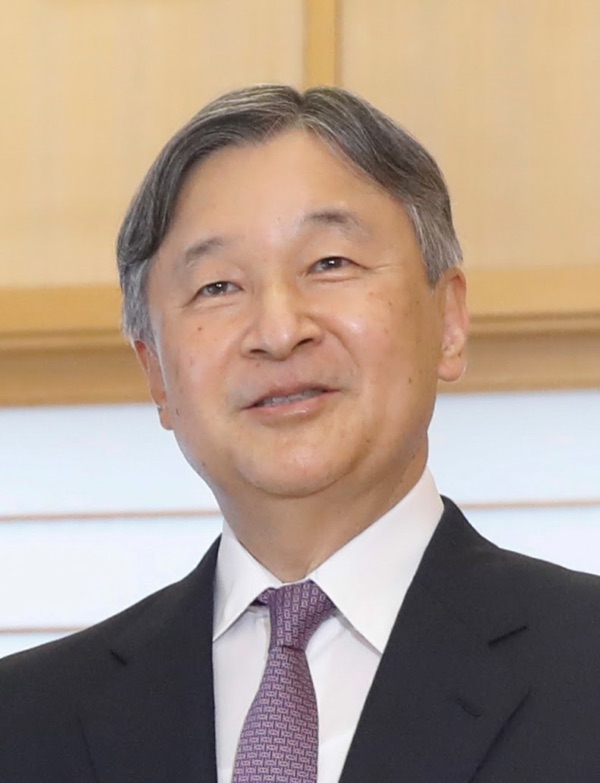
On the first day of May 2019, Naruhito ascended the Chrysanthemum Throne and inaugurated the Reiwa era — “Beautiful Harmony” — becoming Japan’s 126th emperor in a line of succession that, by official count, stretches back more than 1,400 years. No other reigning dynasty on earth can make that claim. Yet for all the antiquity of the institution, if you go looking for a personal fortune commensurate with that pedigree, you will come away almost empty-handed. The explanation is not mystery or modesty. It is law, written during the American occupation, and it is among the most thorough asset-stripping of a royal house in modern history.
Naruhito himself is a quietly compelling figure — Oxford-educated (Merton College, 1983–1986), a committed advocate for global water conservation, a viola player with a mountaineer’s appetite for the outdoors. He married diplomat Masako Owada in 1993 against the considered advice of people who understood what palace life would cost her; their daughter Princess Aiko was born in 2001. By all accounts he is a thoughtful, bookish emperor navigating a court culture that has not always made such qualities easy.
The 1947 Reset
Before the Second World War, the Imperial House was one of the largest landowners in Japan. The Emperor controlled vast private estates, forests, farms, and corporate shareholdings accumulated over centuries. The institution was not just symbolically supreme — it was economically powerful in its own right.
The occupation authorities changed that comprehensively. The 1947 Imperial Household Law dissolved eleven collateral branches of the Imperial Family at a stroke, stripping their members of imperial status and the privileges that came with it. More consequentially, the private imperial estate was transferred to state ownership. The palaces — including the Tokyo Imperial Palace, which sits on land in central Tokyo worth more, by some estimates, than the entire state of California was once compared to — became national property administered by the government. The Imperial Regalia of Japan, the three sacred objects (mirror, sword, and jewel) at the symbolic core of imperial legitimacy, are held as national treasures, not personal heirlooms that could be inventoried on a balance sheet.
What remained after 1947 was an institution funded by the state rather than one that funded itself.
A Government Stipend, Not a Dynasty’s Endowment
Today the Imperial Family lives on a budget set annually by the National Diet and administered by the Imperial Household Agency, the bureaucratic body that manages court affairs and has final say over nearly every aspect of imperial public life. The Agency’s total budget runs to roughly ¥11.6 billion per year — approximately $75–80 million at recent exchange rates — but this covers everything: staff salaries, palace maintenance, official travel, ceremonies, and the operational costs of running a working institution. The portion flowing to the Emperor and his immediate family as personal income is a fraction of that figure, set by law at a level appropriate to a senior public official rather than to a hereditary dynast.
The palaces the family occupies — the Tokyo Imperial Palace, the Akasaka Imperial Residence, the Imperial Villa at Hayama — are state assets. The family lives in them; they do not own them. The distinction is not pedantic. It means there is no asset base the Emperor could leverage, sell, or bequeath. It means that unlike the British monarch, who personally owns Sandringham and Balmoral, or the Sultan of Brunei, who holds his palaces as private property, Naruhito’s relationship to the buildings he inhabits is closer to that of a head of government housed in a state residence than to that of a property magnate.
What He Actually Has
The honest answer is that Naruhito’s personal wealth is modest by the standards of any comparable head of state, let alone a monarch presiding over the world’s third-largest economy. There are no published accounts of private investments, no Duchy income, no independent landholdings on record. The Imperial Family is not poor in any lived sense — the state provides well-maintained residences, staff, and the machinery of a working court. But personal, freely disposable wealth of the kind that would appear on a rich-list estimate appears to be genuinely limited.
The figure that matters for CrownAssets purposes is essentially institutional: Japan’s imperial apparatus commands significant state resources, and the symbolic and soft-power value of the institution is incalculable. The personal figure, by deliberate postwar legal design, is something else entirely — and the records to verify it precisely are not in the public domain.
The Imperial Household Agency publishes budget totals, but itemised breakdowns of personal imperial income are not publicly disclosed; the personal wealth figure here is necessarily an inference from legal structure rather than a verified balance sheet.