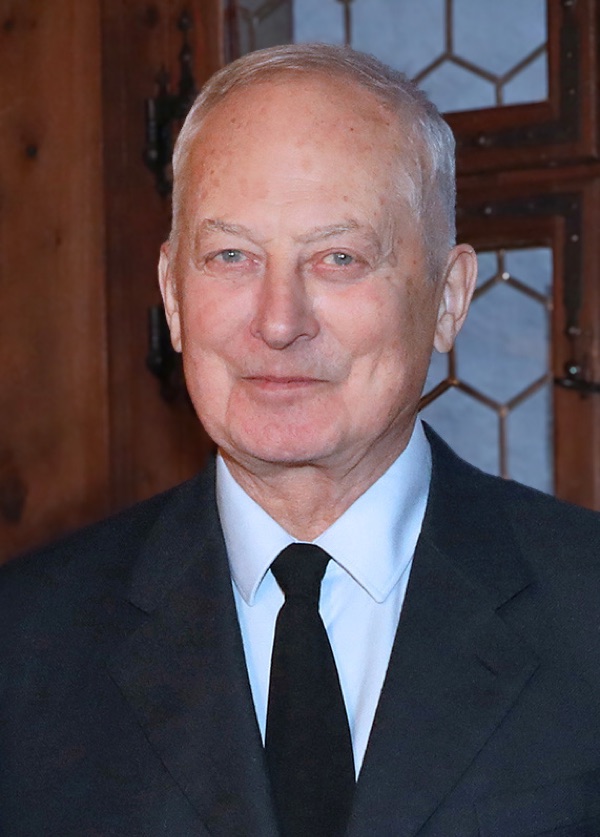
There is a particular pleasure in covering Liechtenstein. Other European royal families sit atop foundations, trust structures, and state museums and debate with varying conviction whether any of it is really theirs. Hans-Adam II — born in Zürich on 14 February 1945, reigning Prince since 13 November 1989 — has largely settled that question in his own case. The bank is his family’s. The art collection is his family’s. The castle on the hill above Vaduz is his family’s. The tiny alpine nation wedged between Switzerland and Austria is, constitutionally, partly his as well.
The Fortune Is Private. That Is Unusual.
The clearest expression of the family’s wealth is LGT Group. Founded in 1920 and pulled out of crisis in the 1930s when the princely house acquired a controlling stake, LGT today sits among Europe’s significant private banks, with assets under management well north of SFr 190 billion. The Prince of Liechtenstein Foundation holds ownership — the same foundation that funds Vaduz Castle’s upkeep and distributes annual allowances to family members. Two of Hans-Adam’s sons, Prince Philipp and Prince Maximilian, chair and lead the institution respectively. This is not a ceremonial association. It is a family business that has been built over generations, gone private again after a brief period as a listed company, and now operates globally out of Vaduz, Zurich, and a network of international offices.
Then there are the Princely Collections: one of the largest and most distinguished private art holdings in the world, assembled over four centuries by the Liechtenstein dynasty. Old Masters — Rubens, van Dyck, Raphael — alongside baroque furniture, armour, and decorative arts. The public sees part of it at the Liechtenstein Museum in Vienna; the family owns all of it. Unlike the British Crown’s collection, which belongs to the Crown and travels with the monarch in a strictly legal sense, the Liechtenstein holdings are hereditary private property. When Hans-Adam sold a Leonardo drawing in 2001 for a reported $28 million to plug a funding gap during a lean period for Liechtenstein’s economy, he could do so because it was his to sell.
Estimating the total is genuinely hard. Bloomberg pegged his net worth at roughly $6.2 billion in 2022, but that number requires assumptions about LGT’s private valuation and the art collection’s liquidation value — two figures that are both unknowable with precision and unlikely to be tested any time soon. A range of $3.5 billion to $5 billion on a conservative private-asset basis is defensible; the higher Bloomberg figure is plausible if LGT is marked at a full market multiple.
A Prince With a Veto, Mostly Retired
Hans-Adam is also unusual among European monarchs in that he has real constitutional teeth. After a 2003 referendum — which he won, having reportedly threatened to leave the country if it failed — he secured powers including the right to dismiss the government and veto legislation. Critics called it an anachronism. He called it a necessary counterbalance to parliamentary overreach. The debate was pointed; the outcome was unambiguous.
In practical terms, though, he stepped back. On 15 August 2004, he handed day-to-day government responsibilities to his eldest son, Hereditary Prince Alois, who has functioned as regent ever since. Hans-Adam retains the title and the ultimate constitutional authority; Alois runs the shop. The arrangement mirrors the one Hans-Adam himself had with his own father, Franz Joseph II, during the 1980s — a family tradition of pragmatic transition that avoids both abdication and the spectacle of an aged monarch governing in name only.
What You Can and Cannot Know
Liechtenstein is small — roughly 40,000 people, about the size of a mid-sized suburb — and its princely house does not publish consolidated accounts. LGT files what it must in the jurisdictions where it operates; the Princely Collections publishes catalogues, not valuations. What is unusually clear for a royal family is the structure: private ownership, verifiable through corporate filings and decades of documented history, with no ambiguity about whether the assets belong to the family or to the state.
The honest ceiling on certainty: the actual figure depends on what a private banking group and an irreplaceable art collection would fetch if someone ever tried to sell them, and no one in Vaduz is rushing to find out.