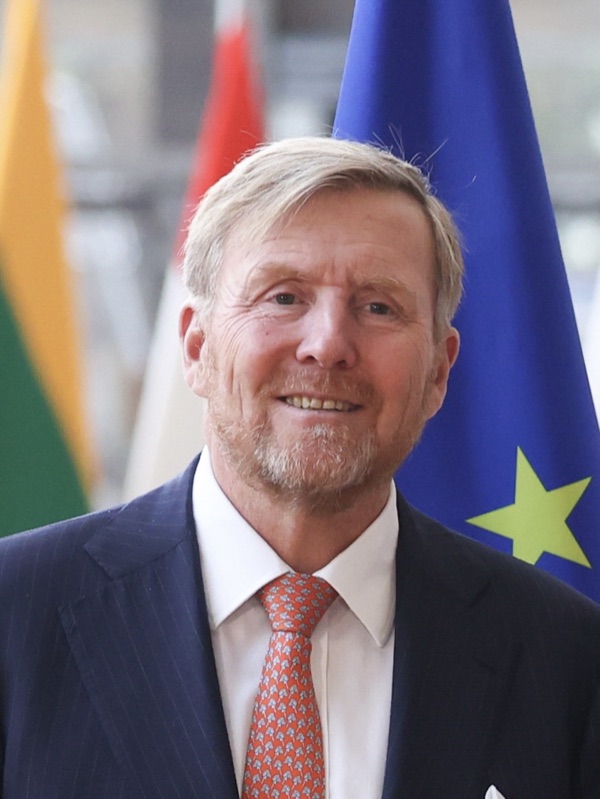
On 30 April 2013, Willem-Alexander stepped onto a balcony in Amsterdam and became the first King of the Netherlands in over a century. His mother, Queen Beatrix, had signed the abdication papers that morning — a Tuesday, her seventy-fifth birthday — and handed the crown to a man who had spent his adult life as a water management engineer, a competitive rower, a commercial airline pilot, and an occasionally awkward prince-in-waiting. He was forty-six. He was, according to a genre of breathless newspaper coverage that persists to this day, one of the richest royals on earth.
That claim deserves a close look — because it rests almost entirely on a historical accident that stopped being true decades before he ever took the throne.
The Shell Myth
The “Dutch royals are extraordinarily wealthy” story traces back to a single source: Royal Dutch Shell. For much of the twentieth century, the House of Orange-Nassau held a substantial personal stake in the Anglo-Dutch oil giant, a legacy of the company’s founding arrangements with the Dutch government. Those holdings made Queen Wilhelmina, Willem-Alexander’s great-grandmother, genuinely formidable by any measure — routinely cited as the richest woman in the world in her time.
The problem is that by the time Beatrix was on the throne, and certainly by the time Willem-Alexander inherited it, that Shell stake had been reduced, diversified, and largely dissolved into a broader portfolio of private investments managed through holding structures. The family’s wealth did not ride Shell’s fortunes into the twenty-first century in the way the popular shorthand implies. When journalists write that the Dutch royal family owns “billions” in Shell stock, they are recycling a fact that has not meaningfully described the family’s balance sheet for a generation.
What remains is real but considerably more modest. Willem-Alexander’s private wealth — investments, private property, personal holdings — is estimated in the range of roughly €150 million to €250 million, or somewhere around $200 million to $300 million at current exchange rates. That is a comfortable fortune by any normal standard. It is not the fossil-fuel windfall the legend suggests.
Palaces Are Not His
Here the Dutch case offers a particularly clean lesson in the personal-versus-state distinction. The Netherlands has a portfolio of royal palaces — the Royal Palace on Dam Square in Amsterdam, Palace Noordeinde in The Hague, Huis ten Bosch where the King and Queen Máxima actually live — and none of them belong to Willem-Alexander personally. They are state property, administered for royal use by the government, and not assets he could sell, pledge, or pass to his children as a private bequest.
The one genuine exception is the Eikenhorst estate in Wassenaar, the family’s previous home, which was private property. The family moved to Huis ten Bosch in 2019 after a lengthy and controversial renovation funded in part by the state. He also owns a villa in the Greek Peloponnese — a property that attracted considerable press attention in 2020 when it emerged he had been using it during the early weeks of the coronavirus pandemic while his government was advising Dutch citizens to stay home. He returned early. The villa stayed.
The Budget
The Dutch state provides the monarch with an annual constitutional allowance — a figure voted on by parliament and publicly reported, covering official duties, staff, and a personal component. As of recent parliamentary cycles, Willem-Alexander’s total budget runs to several tens of millions of euros annually, with distinct allocations for operational costs (palace maintenance, official travel, household staff) and a personal portion that functions more like a salary. The entire arrangement is documented and subject to annual scrutiny, which makes the Dutch monarchy among the more financially transparent in Europe. What is not transparent is the private investment portfolio — its composition, returns, and management structures remain outside the public record.
He also still flies. Two or three times a month, Willem-Alexander takes the co-pilot seat on a commercial KLM aircraft, a habit he has maintained since the 1990s. It is a source of modest income and, clearly, personal identity. It is also, in the context of royal wealth reporting, a useful corrective image: the King of the Netherlands, boarding a 737 and asking passengers to please stow their luggage in the overhead compartment.
The Number
Our working estimate for Willem-Alexander’s personal fortune is approximately $200–300 million — meaningful wealth, comfortably placing him among the upper tier of European monarchs by personal holdings, but nowhere near the top of any global royal rankings once state property is correctly excluded. The basis is mixed: partial inference from known holdings, press reporting, and the general shape of what remains after the Shell myth is set aside.
The honest answer is that Dutch royal finances are better documented than most, but the private portfolio remains genuinely opaque. Anyone claiming a precise figure is guessing with confidence they have not earned.