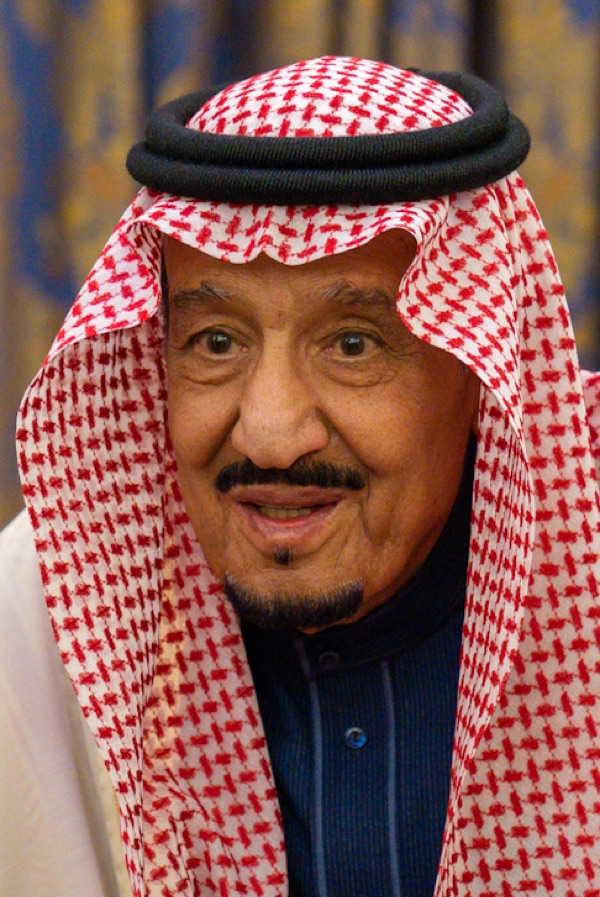
Three Fortunes, One Family, Zero Disclosure
Here is the problem with assigning a net worth to the House of Al Saud: the closer you look, the less the number means. Some estimates top $1.4 trillion. Others cite a more modest — though still staggering — $18 billion for King Salman personally. Both figures are probably true, in different ways, about different pots of money, and neither is independently verifiable. The distinction between the King’s personal wealth, the Saudi state’s assets, and the Public Investment Fund’s sprawling global portfolio exists in legal documents that no outside auditor has ever reviewed in full.
King Salman bin Abdulaziz Al Saud acceded to the throne on January 23, 2015, following the death of his half-brother King Abdullah. He was 79. He is the Custodian of the Two Holy Mosques, and for nearly five decades before that he ran Riyadh Province — the capital governorship that functions, in Saudi politics, as a proving ground for serious men. Salman is a serious man. He is also, by most accounts, increasingly unwell; strokes, reported cognitive decline, and a spinal surgery have shifted the day-to-day center of gravity decisively to his son.
That son is Mohammed bin Salman — MBS, Crown Prince and, since September 2022, Prime Minister — and he is the de facto ruler of the kingdom in every meaningful sense. Understanding the Al Saud fortune requires understanding that “the Al Saud fortune” is not really a personal balance sheet. It is a system.
The Architecture of Entanglement
Saudi Aramco is the world’s most profitable company. The Public Investment Fund, which MBS chairs, manages roughly $700 billion in assets and has placed bets everywhere from SoftBank’s Vision Fund to golf tournaments to a planned mega-city called NEOM rising from desert and ambition in equal measure. The Saudi state budget flows from oil revenues that Aramco generates. The royal family — some 15,000 princes and princesses across multiple generations of an extended dynasty — draws stipends, contracts, and patronage from a system in which these three streams are deliberately, structurally blurred.
This is not an accident of poor bookkeeping. It is the design. The family, the fund, and the state reinforce one another’s legitimacy and liquidity. Teasing them apart would require access that no journalist, analyst, or foreign government has been granted.
What we can document is more textural. A French château purchased for around $300 million. A Leonardo da Vinci painting — Salvator Mundi — acquired at Christie’s New York in 2017 for $450 million, the highest price ever paid for a work of art at auction, with Saudi government sources later connected to the buyer. A 134-meter superyacht. These are not disputed facts; they are the visible waterline of something much larger and much less visible.
The Ritz-Carlton Settlement and the Question of Whose Money
In November 2017, MBS ordered the detention of roughly 200 princes, ministers, and businessmen at the Ritz-Carlton hotel in Riyadh, billing it as an anti-corruption drive. Detainees were held under conditions that human rights investigators later described as coercive. The Saudi government claimed to have recovered assets worth up to $100 billion in settlements — a figure it announced without documentation. Critics noted that the purge conveniently neutralized potential rivals to MBS’s consolidation of power. Both things can be true at once.
The episode illustrates the fundamental difficulty of the Al Saud wealth question. When the head of government can freeze, seize, or redistribute the assets of the ultra-wealthy by decree — and when that same government’s finances are inseparable from the ruling family’s — “personal net worth” becomes a category that doesn’t quite apply. Salman is worth what the kingdom allows him to be worth, and the kingdom is, to a meaningful degree, what his family decides it is.
What We Actually Know
King Salman’s documented personal fortune — property, investments, accounts traceable to him individually — sits somewhere north of $18 billion by credible estimates, which would rank him among the wealthiest royals on earth even on that conservative accounting alone. MBS controls or influences the PIF’s $700 billion deployment. Aramco’s market cap has exceeded $2 trillion. Add the state’s sovereign assets and the number climbs toward figures that strain comprehension.
The honest answer is that no one outside a very small circle in Riyadh knows where Salman’s money ends and Saudi Arabia’s begins — and the people in that circle are not telling.