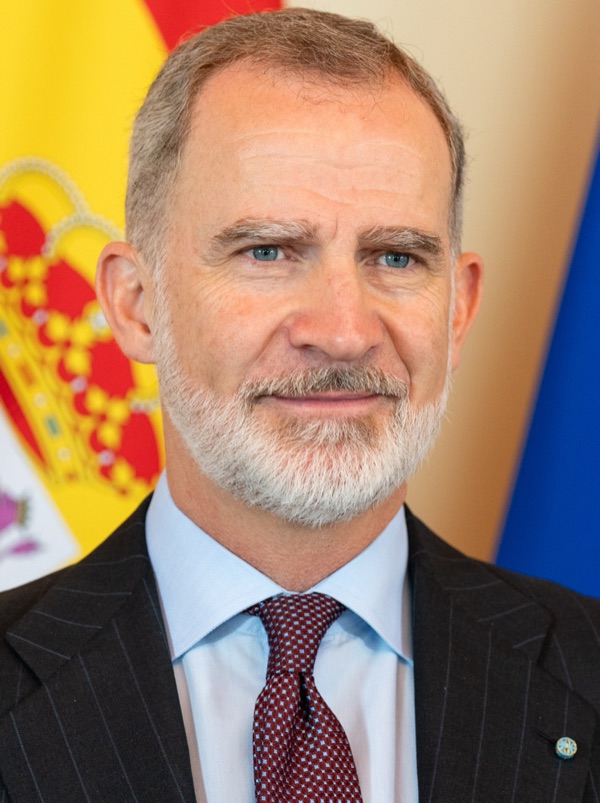
Spain’s monarchy sits at a peculiar intersection of grandeur and austerity. The Royal Palace of Madrid — 135,000 square metres, 3,418 rooms, one of the largest working palaces in the world — belongs not to the king but to the Spanish state. King Felipe VI does not own it. He uses it for ceremonies. When tourists queue up on the Plaza de la Armería, they are visiting a property administered by Patrimonio Nacional, a government agency with a €149 million annual budget, that also runs El Escorial, the palaces at Aranjuez and La Granja, and the lakeside retreat at Riofrío. The Crown occupies these spaces the way a senior civil servant might occupy a government car: by entitlement of office, not personal ownership.
Felipe himself lives and works at Zarzuela Palace, a comparatively modest hunting lodge on the outskirts of Madrid that the royal family has used as a working residence since the 1960s. It too is state property.
The €2.6 Million King
In April 2022, Felipe VI did something almost no reigning monarch had done before: he published his personal assets. The declared total came to approximately €2.6 million, spread across savings accounts, securities, art, antiques, and jewellery. No foreign real estate. No offshore holdings. By the standards of European royalty — let alone the Gulf monarchies or Brunei — the figure is remarkably small.
The declaration was not entirely spontaneous. It came after years of reputational damage inflicted by his father, and it landed with the deliberate force of a contrast. Felipe was saying, in the language of balance sheets: I am not my father.
The Shadow of Juan Carlos
Juan Carlos I had been, for decades, one of the more admired figures in European politics — the king who helped shepherd Spain’s transition to democracy after Franco. Then, slowly and then all at once, the financial revelations came. A €65 million transfer routed through the Lucum Foundation, a Swiss-registered entity linked to the late Saudi King Abdullah. Tax investigations in Spain and Switzerland. A discreet exile to Abu Dhabi in 2020 that was framed, with some awkwardness, as a voluntary departure.
Felipe’s response was methodical and pointed. In March 2020, as the Lucum story broke open, he publicly renounced any personal inheritance he might receive from Juan Carlos. That same announcement stripped his father of the annual allowance the king received from the state budget — roughly €194,000 per year — cutting the financial thread between the institution and the scandal as visibly as possible.
It was an extraordinary act. Sons do not typically disinherit their fathers; heirs apparent do not typically strip their predecessors of state income while those predecessors are still alive. That Felipe did both, in the same press release, signalled something about the calculations being made inside Zarzuela.
The Institutional Case
Spain is, in the taxonomy of royal wealth, what analysts might call the clean institutional case. The assets are enormous — palaces, artworks, entire monasteries — but they belong to the state, administered by a public agency, open to the public on most days of the week. The personal fortune is small and, unusually, documented. The king was born on 30 January 1968 and ascended on 19 June 2014 after his father’s abdication; in the twelve years since, he has pursued a deliberate strategy of institutional credibility over personal accumulation.
Whether that strategy has worked is a matter of polling data and constitutional interpretation. Spain’s monarchy faced genuine republican pressure in the early 2010s, and the Juan Carlos revelations kept the pressure alive. Felipe’s transparency moves were partly defensive. But defensive and genuine are not mutually exclusive, and his declared estate — verified against public filings — is what it appears to be.
The one honest caveat: what any monarch declares is not necessarily what a complete forensic audit would find. Felipe’s published figures represent voluntary disclosure, not an independent examination of every financial relationship touching the Crown. For now, however, Spain offers something rare in the world of royal wealth: a number, a name, and a filing date.