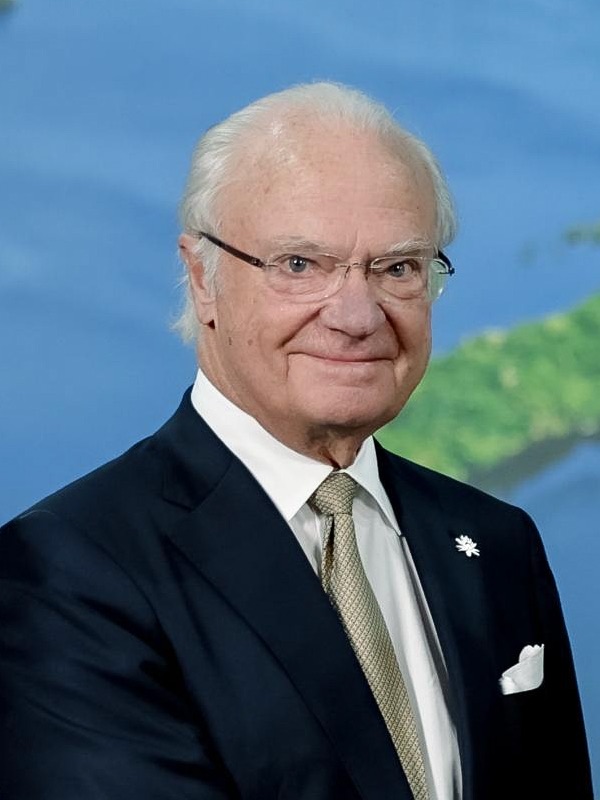
He has reigned since 1973, longer than most Swedes have been alive. He has opened more sessions of parliament, attended more state banquets, and pressed more ceremonial flesh than virtually any other sitting monarch in Europe. Yet when it comes to personal wealth, King Carl XVI Gustaf of Sweden — born at Haga Palace on April 30, 1946, and crowned at fifty-three days of age in the minds of a grieving nation after his grandfather Gustaf VI Adolf died — turns out to be a surprisingly modest entry in any royal rich list. The short version: the grandeur is real, but most of it belongs to Sweden, not to him.
The Constitution Took the Power — and the Palace Keys
The timing of Carl Gustaf’s accession, September 15, 1973, was almost perfectly synchronized with a constitutional reordering that would define his entire reign. Sweden’s 1974 Instrument of Government stripped the monarchy of its remaining executive functions, leaving the king with ceremonial and representative duties and little else in the way of formal authority. He no longer appoints the prime minister, does not sign legislation into law, and holds no command over the armed forces. His own chosen motto — For Sweden, with the times — reads less like royal swagger and more like a man who understood early that the times had moved on.
That constitutional shift also clarified something important about royal property. The grand addresses associated with the Swedish crown — Stockholm Palace in the heart of the capital, the fairy-tale lakeside spread of Drottningholm, Gripsholm Castle, Ulriksdal — are state assets, administered by the National Property Board and maintained at public expense. The king and his family use them; they do not own them. The regalia locked inside are national treasures, not heirlooms that could one day appear at Christie’s. Visitors to these palaces are, in a meaningful sense, visiting their own property.
What He Actually Owns
Strip away the state real estate and what remains is a private fortune that wealth trackers estimate in the range of roughly $60–70 million — a figure assembled from educated inference rather than Swedish tax filings, which are technically public but offer limited granularity on the royal household’s structure. The monarchy is funded through a parliamentary grant (the apanage), a fixed annual allocation that covers official duties and the costs of the working royal household. It is generous by most people’s standards and modest by billionaire ones.
The more interesting private asset is the Bernadotte Art Collection, a substantial holding of paintings, furniture, and decorative objects accumulated by the dynasty over two centuries since Jean-Baptiste Bernadotte — a French Napoleonic marshal with improbable ambitions — was elected heir to the Swedish throne in 1810 and founded the line that Carl Gustaf now represents. The collection is privately held by the family, distinct from the state-owned palace inventories, and while it has never been publicly valued in any systematic way, serious dynastic art collections of comparable depth routinely run into the tens of millions. It is, quietly, probably the most consequential private asset the family holds.
Carl Gustaf married Silvia Sommerlath in 1976, and the couple have three children — Crown Princess Victoria, Prince Carl Philip, and Princess Madeleine — and nine grandchildren. The family’s private real estate is modest compared with, say, the British or Dutch royal families. There is no sprawling private estate on the scale of Sandringham or Highgrove to factor in.
A Reign Built on Continuity, Not Capital
What Carl Gustaf has accumulated over half a century is less financial than institutional: a reputation as a steady, low-drama steward of a constitutional role that demands dignity and discretion in roughly equal measure. Sweden’s monarchy polls well precisely because it does not appear to be costing the public very much while quietly doing the soft-power work — trade missions, state visits, environmental advocacy — that elected officials rarely have the continuity to sustain. He is, by the standards of European monarchies, a bargain.
The honest summary for any wealth-watcher: Sweden’s crown looks richer than it is. The palaces are spectacular and they are not for sale, because they are not the king’s to sell. The private fortune is real, built on a combination of apanage savings, the family’s art holdings, and whatever private investments the House of Bernadotte has made over the generations — but precise figures remain, as with most European royal families, a matter of informed estimation rather than documented fact.