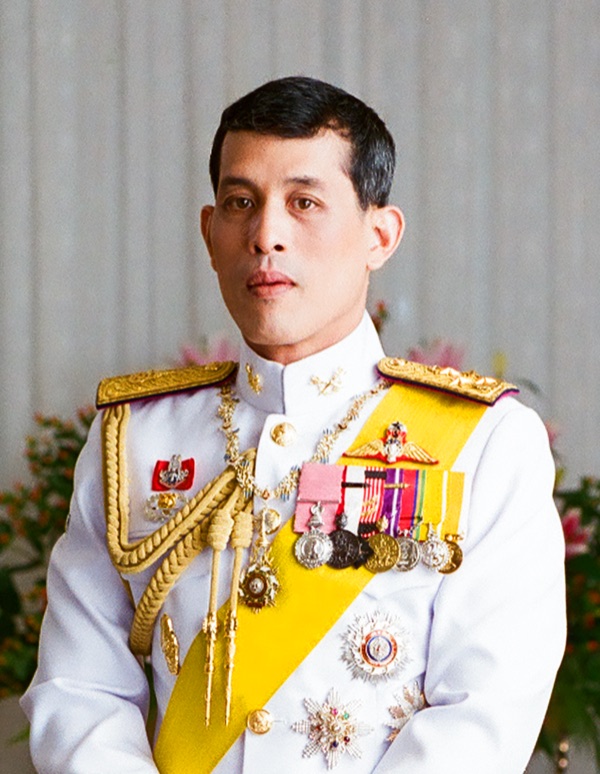
When King Bhumibol Adulyadej died in October 2016 after seven decades on the throne, Thailand mourned one of the most genuinely beloved monarchs of the modern era. His son, Vajiralongkorn — now Rama X of the House of Chakri — inherited not just the title but a question that wealth reporters had circled for years: exactly whose money was it, anyway?
The answer, it turns out, depended heavily on which year you asked.
The Reclassification Heard Around the World
For generations, Thailand maintained a careful legal fiction: the vast portfolio managed by the Crown Property Bureau belonged to the monarchy as an institution, not to the sitting king personally. The bureau held roughly 10 square kilometres of prime Bangkok real estate — some of the most valuable urban land on earth — along with a 30 percent stake in Siam Cement Group and a 21 percent stake in Siam Commercial Bank. Dividends from those two holdings alone reportedly exceeded $200 million annually as recently as 2010.
In 2017 and 2018, new legislation quietly dissolved that distinction. Crown property was reclassified as the king’s personal property. No auction, no purchase, no exchange — a change in legal doctrine, and assets estimated at somewhere between $70 billion and $130 billion shifted from institutional to individual ownership on paper. Whatever Vajiralongkorn was worth the day before those laws passed, he was worth considerably more the day after.
That single stroke places him in genuinely rarefied company. Business Insider pegged his fortune around $30 billion in 2019; other estimates stretch past $70 billion. The range is enormous precisely because the underlying assets — unlisted land, privately held corporate stakes, palace properties — resist the clean mark-to-market arithmetic that makes tech-billionaire scorecards feel tidy.
A King Who Prefers Bavaria
One complicating wrinkle for any profile of Thailand’s monarch: he is frequently not in Thailand. Vajiralongkorn has spent long stretches in Bavaria, Germany — enough that German Foreign Minister Heiko Maas felt compelled, in 2020, to publicly warn that Thai affairs should not be conducted from German soil. For a period during that year, the king rented the entirety of the Grand Hotel Sonnenbichl in Garmisch-Partenkirchen. His son attends school there.
Back in Bangkok, his primary residence is the Amphorn Sathan Residential Hall, one of several palace compounds in the capital. The broader palace estate, like the land portfolio, is not publicly catalogued.
Vajiralongkorn holds the ranks of Field Marshal, Admiral, and Air Chief Marshal — collecting martial titles with the same quiet accumulation that characterises his financial story.
The Scrutiny Problem
Any honest accounting of this fortune runs into a structural obstacle: Thailand’s lèse-majesté law is among the most strictly enforced on the planet, carrying prison sentences of up to 35 years per count. Thai journalists, academics, and ordinary citizens face genuine legal jeopardy for public commentary on the monarchy — which means the granular investigative work that would ordinarily sharpen a wealth estimate simply does not exist in the Thai press. International coverage fills part of the gap, but without access to the underlying land registries or corporate disclosures, even serious financial journalists are working from the edges.
The CPB’s specific Bangkok land parcels have never been made public. The 2008 estimate of roughly $31 billion for the real estate alone predates both the 2017–18 reclassification and more than a decade of Bangkok property appreciation. Every number in this profile should be treated as a rough bearing, not a coordinate.
Our read: $30B–$43B, personal basis, low confidence. The 2018 reclassification is legally documented; the asset values beneath it are not. Until Thai law permits the kind of scrutiny applied to comparable fortunes elsewhere, the full picture will remain, by design, unknowable.